
The Hard Discount Tsunami in Latin America and the Remarkable Success Story of TUTI in Ecuador

The hard discount phenomenon has ceased to be an emerging trend; it is now the primary engine of structural transformation in Latin American retail. Offering a ruthless value proposition focused on low prices, optimized logistics, and operational efficiency, this business model has evolved from its European origins into a highly localized powerhouse perfectly calibrated for the Latin American consumer.
According to recent industry studies by Deloitte, the hard discount format already captures over 30% of modern retail in key markets and is projected to dominate up to 40% of the regional market by the end of the decade. For FMCG (Fast-Moving Consumer Goods) manufacturers and traditional retailers, this is no longer an alternative channel—it is the definitive battleground for market share.
The Latin America Panorama: Hard Discount in Full Expansion
While the format originated in Germany in the 1960s with a focus on simplicity, its Latin American execution has been uniquely aggressive:
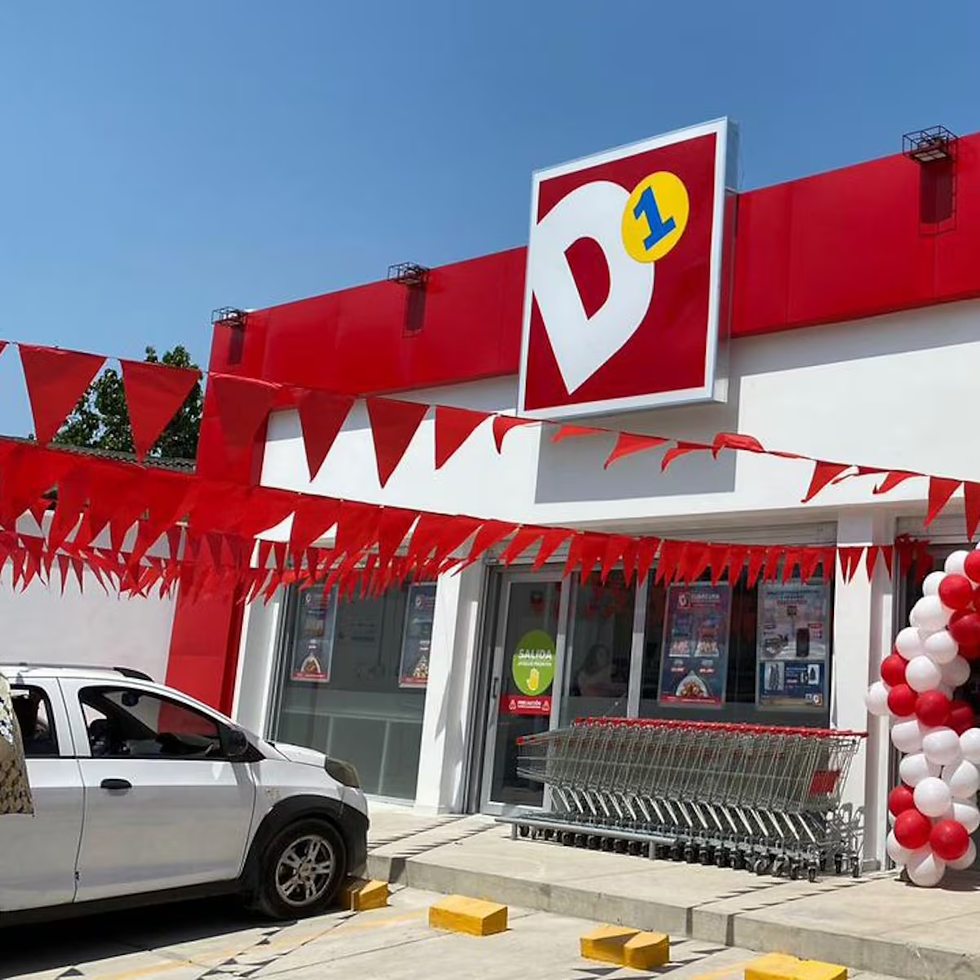
Colombia (The Mature Market): In less than a decade, Colombia has become the regional benchmark. Formats like D1 and Ara have reached an astonishing 99.5%
Household penetration according to Kantar's recent data, capturing 75% of consumer preference. By the end of 2024, the country boasted over 4,150 hard discount stores—roughly one for every 13,000 inhabitants.
Mexico (The Explosive Frontier): The format is currently experiencing exponential growth. Pioneers like Tiendas 3B recently surpassed 3,000 locations, achieving near 40% year-over-year revenue growth. The channel now represents a formidable threat to traditional supermarkets and local bodegas.
Brazil (The Hybrid Evolution): Rather than pure hard discount, Brazil adapted the philosophy into the Atacarejo (Cash & Carry) format, which has achieved deep market penetration (over 25%) and continues to rapidly cannibalize traditional retail sales.
Ecuador: The Unprecedented Rise of TUTI
Ecuador is currently witnessing one of the most aggressive retail disruptions in the hemisphere through the TUTI chain. By focusing on essential products, hyper-efficient supply chains, and an emotional connection through real value, TUTI has rewritten the rules of the Ecuadorian market.
The updated figures are staggering:
Exponential Financial Growth: TUTI reached $693 million USD in sales in 2024, representing a massive 55% year-over-year growth.
Market Penetration: According to Kantar (Q1 2025), TUTI has skyrocketed to an incredible 88% household penetration nationwide, up from 60% just a year prior. It has fundamentally altered the shopping habits of both middle and low-income demographics.
Category Disruption: TUTI is no longer just about basic pantry staples. They are aggressively capturing market share in unexpected, high-margin categories such as personal care and beauty (where their penetration jumped from 31% to 59% in one year) and frozen proteins.
Rapid Expansion: Averaging nearly 100 new store openings per year, the chain operates over 685 locations, expanding successfully from the coastal regions into the highlands.
TUTI’s success proves that the Latin American consumer will not compromise on quality if the price architecture and store proximity are correctly executed.
The TMC's view: Strategic Imperatives for FMCG and Traditional Retail
At TMC Consultores Comerciales, we emphasize that surviving this retail transformation requires immediate strategic recalibration:
For Traditional Supermarkets: Competing solely on price against discounters is a losing battle. Traditional retail must pivot toward of
fering superior shopping experiences, an unbeatable fresh food assortment, and targeted loyalty programs to reduce the impact of a shrinking average ticket.
For FMCG Manufacturers: You cannot apply traditional Route to Market (RTM) strategies to discounters. Manufacturers must actively participate in the channel's growth through strategic Private Label manufacturing or by developing exclusive, channel-specific SKUs (pack sizing) that protect traditional margins while securing massive volume.
Category Reconfiguration: Brands must understand their specific role within the hard discount environment. If your brand lacks a clear emotional or functional differentiation, it will be rapidly replaced by a high-quality private label.
Is your commercial strategy ready for this shift?
At TMC, we partner with manufacturers and retailers to audit and redesign Route to Market models, optimize pricing architectures, and develop category strategies that turn market disruption into profitable growth.
Sources: Kantar Worldpanel (2024-2025), Deloitte ("El avance del hard discount hacia 2030"), Forbes RPI Colombia, Superintendencia de Compañías Ecuador.

Comments