
What can Latin America learn from mass consumption trends in Brazil?

Brazil isn't waiting. While other mass consumer markets in Latin America are debating their next steps, the Brazilian market is already taking action. And the signals it's sending are too important to ignore.
For executives, CEOs, and owners of manufacturing, distribution, or retail companies in Mexico, Colombia, Peru, or any other country in the region, what is happening today in Brazil is not a mere geographical curiosity: it is a window into the future with a lag of 3 to 5 years.
These aren't abstract trends. These are business models that are gaining or losing scale, distributors that are being displaced, and consumers who have changed their habits forever.
The question is no longer whether these changes will reach your market. The question is whether your company will be ready when they do.
The Domino Effect Timeline: From Brazil to the Region
Historical analysis of recent years demonstrates that structural changes in Brazilian mass consumption follow a pattern of replication in the rest of Latin America. This "domino effect" typically unfolds in three clear chronological phases:
Phase 1: The Fracture of the Traditional Model (The maturation of the Atacarejo)
It happened in Brazil: 2015 – 2022
Happening in Latin America: 2023 – present
In Brazil, although the historic hyperinflation was overcome in the late 1990s, it was the severe economic recession of 2014-2016, compounded by the inflationary pressure of the pandemic (2020-2022), that dealt the final blow to the traditional supermarket. During these years of declining purchasing power, consumers abandoned brand loyalty in favor of simply making ends meet.
For years, analysts expected Brazil to replicate the Aldi or Lidl phenomenon. It didn't happen. Brazilian consumers have habits that don't mesh well with the small European store model: they prefer larger purchases, variety, and volume. The collapse and exit of DIA from Brazil in 2024 marked the definitive failure of that model.
What did work was the Atacarejo (Assaí, Atacadão), a model that understood that Latin Americans seek price without sacrificing volume or variety. This model is already being replicated explosively in Latin America.
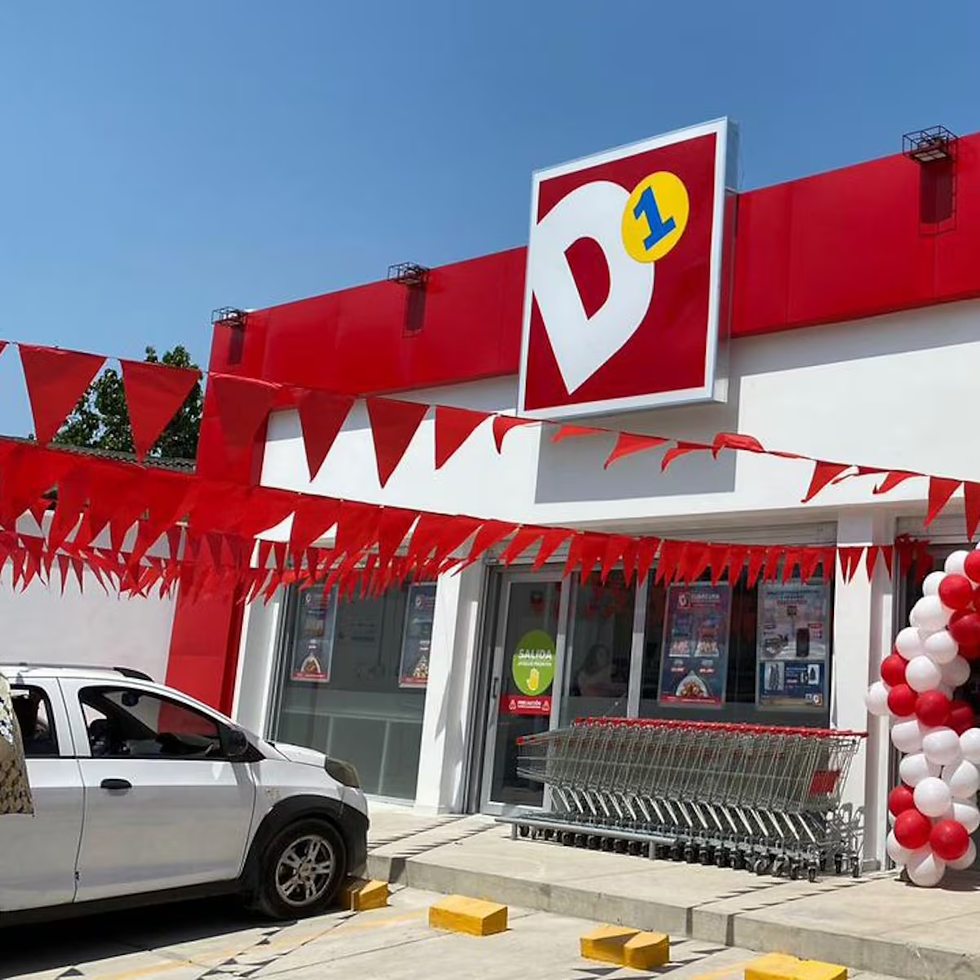
Colombia: The "boom" started between 2015 and 2018 with D1 and Ara stores, consolidating during the pandemic and reaching 20% of the market in 2023.
Ecuador: The disruption started in April 2019 with TuTi , whose current expansion is forcing all traditional supermarkets to react.
Peru: The battle for low prices truly intensified in 2016, the year Tiendas Mass relaunched and accelerated its hard discount format . Its pre-pandemic market share was 7%, and post-pandemic it jumped to 13%, attracting new competitors to the market today.
Mexico: Although pioneers like Tiendas 3B were born in 2005, hyper-accelerated growth exploded from 2020 onwards, along with the evolution of the "Bodegas".
Chile: The rise of local and proximity hard discounting started strongly between 2023 and 2024.
Phase 2: The Efficiency Crisis and the Purge of the Middleman
It happened in Brazil: 2022 – 2024
Happening in Latin America: 2025 – present
Once low-cost channels exceed 40% market share, the pressure on margins becomes suffocating. In Brazil, this exposed the traditional distributor to three destructive forces:
Retail consolidation: Large operators increased their logistical scale, reducing the space for intermediaries without added value.
Manufacturers seeking control: Brands began exploring direct sales or highly specialized distributors. The distributor who simply "moves boxes" became obsolete.
Narrow margins: Consumer demand forces companies to reduce costs. Distributors lacking digitalization and logistical efficiency have been replaced.
Immediate risk: Companies in Latin America that do not digitize their route to market (RTM) and professionalize their distributors between this year and next may see their operating margins severely affected by the logistical burden.
Phase 3: The Total Reconfiguration and Precision RTM
It happened in Brazil: 2024 – 2026 (In progress)
It will happen in Latin America: 2027 – 2029
This is the current phase in Brazil. Consumers are already surgically fragmenting their purchases: basic items at the Atacarejo market, accessories at the supermarket, convenience items via e-commerce , and premium categories at specialty stores.
The challenge: The "one price for everyone" policy is over. Brands must operate with a strictly differentiated pricing and packaging (SKU) architecture for each channel to avoid cannibalizing their profitability. Those who manage all their channels with the same logic will lose.
The categories that survive and grow in the new cycle
As the market evolves, certain categories show sustained growth that serves as a strategic map:
Essential, high-turnover products like toilet paper, detergents, oils, and dairy are gaining strength in low-priced formats. Consumers aren't stopping; they're just changing where they shop.
Private labels and efficient suppliers: Driven by the low-cost model, private labels are accelerating. They represent a major volume opportunity for mid-sized manufacturers and the biggest threat to traditional, undifferentiated brands.
Long tail and emerging brands: Functional categories, snacks, organic products and energy drinks find highly profitable niches thanks to agile manufacturers that execute well in specific channels.
What can the rest of Latin America learn from these mass consumption trends?
The companies that are leading the post-transition market in Brazil share four non-negotiable characteristics:
They're designing a precision RTM: Coverage by volume is dead. It's about visiting the right customers, with the right hyper-segmented assortment.
They operate using real-time data: They use predictive analytics and geolocation. The gap between manufacturers who rely on intuition and those who use data is now insurmountable.
They simplify their portfolios: Too many references destroy logistical and financial efficiency. A small, well-executed portfolio always trumps complexity.
They professionalize the distributor: The strategic partner of the new era generates business intelligence and guarantees availability. If they don't provide data, they reduce profit margins.
Growth without profitability is no longer sustainable. The companies that will survive this new phase will be those that achieve operational efficiency, commercial excellence, and channel flexibility simultaneously.
Recommendations for the board of directors
If we accept that Brazil is the mirror of the future in terms of mass consumption trends, the strategy for the next 24 months in the rest of Latin America must focus on three pillars:
RTM model audit: Is your current distribution model capable of withstanding a 2% drop in gross margin? If the answer is no, your structure is obsolete for Phase 2.
Redesign of the Commercial Strategy by Channel (including Portfolio): Fewer SKUs, but with the right packaging for the channel that is really growing (Atacarejo / Bodega / Hard Discount).
Adoption of Commercial Data: Blind pre-sales are dead. Execution must be driven by algorithms of availability and point-of-sale potential.
The cost of inaction
Companies that wait for trends to "consolidate" in their local country before acting will enter the market when the spaces are already taken by competitors who were able to read the Brazilian news three years in advance.
Does your company face any of these challenges?
TMC Consultores works with manufacturers, distributors, and retail chains in Brazil, Mexico, and other Latin American countries, as well as Spain and the United States, to improve sales strategies, develop more efficient Route to Market models, and strengthen market execution. If your organization needs to adapt to the evolving landscape of mass consumption in Latin America, now is the right time to act.
Sources consulted: ABRAS, NielsenIQ, Deloitte, Predik Data-Driven, America Retail, regional expert sector reports.
Comments