
When the economy is tight, the quality of execution must improve in strategic stores.
From NielsenIQ Brazil's latest Full View 2026 study, the most troubling finding is not that 70% of mass consumption categories declined in volume between the first quarter of 2026 and the same period in 2025. It's the trajectory: in 2024, 20% of categories were down; in 2025, 50%; today, 70%.
Mexico tells a quieter version of the same story: ANTAD reported only 2.2% nominal growth per store between January and May 2026.
Discounting inflation, a large part of the Mexican self-service market is not growing: it is barely breaking even.
When those numbers reach the monthly sales committee, the conversation almost always turns to pricing, promotions, or cutting field expenses. It almost never goes where it should: deciding which stores you're actually going to execute in, and which ones you're going to stop pretending to execute in.
Why shelf arithmetic changes when the market falls
In a growing market, a stockout is a postponed sale: the shopper returns the following week, the category expands, and poor execution is hidden beneath the growth. In a contracting market, that same stockout is a lost sale.
Today's Brazilian consumer enters the store with a fixed budget: 80% plan their purchase before entering, 66% look for lower-priced options, and 45% choose the cheapest product regardless of the brand . Such a shopper doesn't wait for their product. If it's not there, they substitute it. And when they substitute two or three times, substitution ceases to be a behavior and becomes a habit.
That's what the other data point from the study shows: 48% of the categories lost penetration in households . They didn't lose volume because people are buying less often. They lost households.
A disruption in a growing market costs a sale. A disruption in a contracting market can cost a customer.
The quality of execution in strategic stores is usually worse than your report shows.
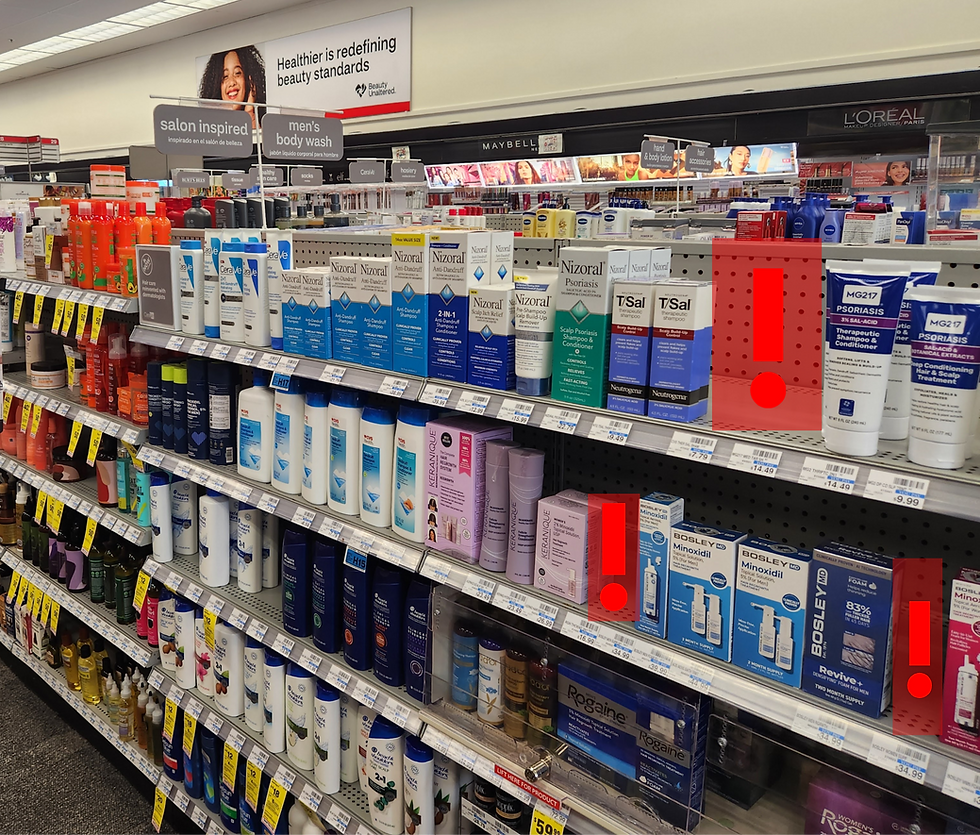
The average stockout rate in food retail is around 8% globally. The Availability Effect study by Retail Economics and DHL (2026) measured, through field audits, an average shelf availability of 89.7% : one out of every ten times a shopper looks for a specific product, they cannot find it.
And here's the statistic that should change the conversation in your committee: up to 70% of those shortages occur within the store , not in the supply chain. Between 25% and 60% of stockouts happen with the product physically present—in the back room, on an unopened pallet, in a box that no one has restocked.
The product arrived. Your investment in production, logistics, and distribution has already been made and paid for. It just didn't travel the last fifteen meters.
The mistake isn't cutting costs. It's cutting them across the board, without proper segmentation of the customer base.
Here is the budget trap that most manufacturers fall into when consumption gets tight.
Finance calls for restraint. Sales responds with a blanket cut: less frequent visits, fewer promoters, fewer marketing hours— distributed evenly across all stores . The reasoning sounds responsible: "We're cutting 15% everywhere; no one will be left behind."
The result is predictable: execution drops from mediocre to bad in all stores alike, including those where you can't afford to fail.
The alternative isn't to spend more. It's to stop distributing the effort as if all stores were worth the same. Because they aren't worth the same, and you already know this: in virtually every traditional retail channel we've analyzed over 30 years, a minority of stores concentrate the majority of the volume and almost all the growth potential. However, the vast majority of companies continue to apply the same frequency, the same assortment, and the same display standards to stores whose contribution differs by an order of magnitude.
In a growing market, that kind of waste is tolerable. In a shrinking one, it's what's costing them market share.
What makes a store strategic
A strategic store isn't simply the one with the highest sales today. It's the one where an improvement in execution quality yields the greatest return. The four basic criteria we use to identify them are:
Category volume and potential , not just your brand. A store where the category is strong and you are underrepresented is worth more than one where you already dominate.
Traffic and area influence. There are stores that set the benchmark price for the neighborhood and influence purchasing behavior in the surrounding area. Losing shelf space there costs more than the receipt.
Flexibility in execution. Some stores respond to an additional display or a well-organized display; others don't budge. Their field team has this information, even though no one asked for it.
Competitive risk. Where is your competitor performing better than you, today?
With these criteria, a differentiated success story is built — three or four different standards of assortment, display, price and visibility depending on the type of store — instead of a single manual that is only half-followed everywhere.
What is gained by concentrating
Studies by leading companies show that the difference between average and exceptional execution is worth between 10 and 20 points of sale and market share . In our Execution Excellence projects with consumer goods manufacturers in traditional retail channels, raising the standard of execution at the point of sale resulted in increases of 15% to 26% in volume per store —without sacrificing a single point of price.
Unlike discounts, which permanently destroy margins, or promotions, which buy borrowed volume and train consumers to wait for the next offer, quality execution does not compromise future profitability and its effect is measured in weeks.
And in a shrinking market, it functions as a transfer mechanism: what your competitor stops executing well in a strategic store, you capture. And vice versa.
(Brazil deserves attention even if you don't operate there: it often anticipates what reaches the rest of the region, as we analyze how Latin America can learn from mass consumption trends in Brazil .)
The question for your next committee
It's not "how much do we cut?". It's: what are our 200 strategic stores, and what was the actual shelf availability of our priority SKUs in those stores last week?
If the answer is "I don't know" or "more or less," that's probably where a large part of the volume that is currently being attributed to the drop in consumption and the country's economy lies.
Let's talk for 30 minutes. No sales pitch: a conversation to identify your sales bottleneck and what to address first. At TMC, we don't stop at making a recommendation; we support you until the change is working within your organization and the results are visible in your store. Contact us through our contact page .


Comments