
The impact of scent on purchasing decisions in mass consumer goods and retail

In the competitive world of retail and mass consumption, capturing the shopper's attention and achieving effective conversion is an increasingly complex task. Promotions, product placement, and visual ambiance play an important role, but there's a factor that often goes unnoticed yet has immense power: scent.
Recent neuromarketing studies have shown that scents can directly influence product perception, dwell time in stores, and, most importantly, purchasing decisions. The world's most successful retail chains are already using scent marketing as a strategic tool. So why aren't you?
The impact of scent on purchasing decisions and emotional connection in retail
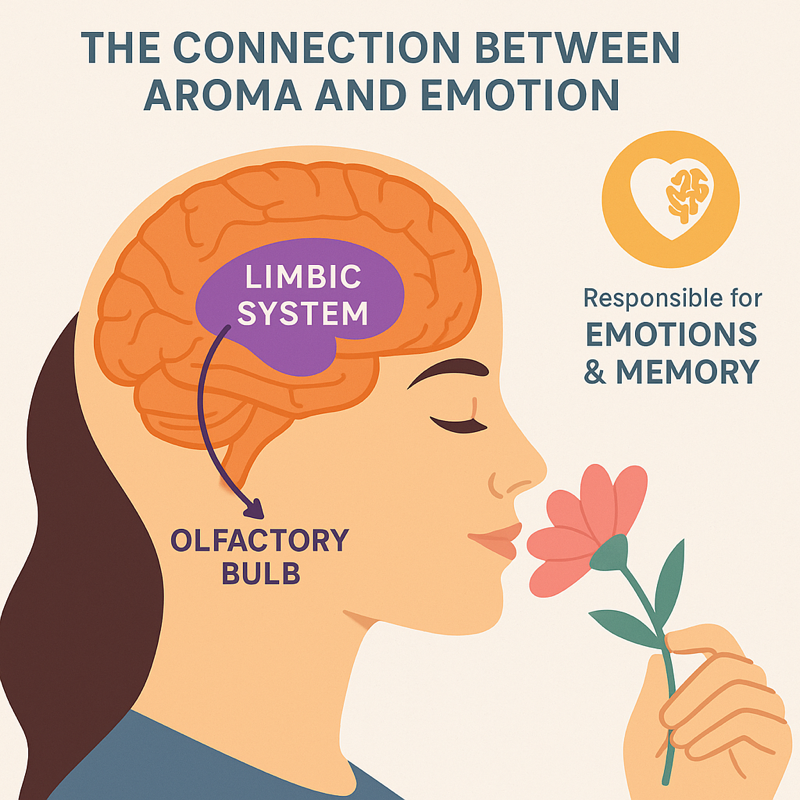
Unlike other senses, smell is directly connected to the limbic system, which is responsible for emotions and memory. This explains why a scent can transport us back to a past experience or evoke an immediate emotion.
According to Martin Lindstrom, author of the bestseller Buyology , 75% of the emotions we experience throughout the day are influenced by what we smell. This makes it a key sense for building deep connections between brands and consumers.
Aromas have the unique ability to activate the limbic system, the part of the brain responsible for emotions, behavior, and long-term memory. Unlike visual or auditory stimuli, olfactory stimuli do not first pass through the rational filter of the neocortex , making them powerful emotional triggers.
This means that a scent can:
Elevate mood
Reduce anxiety
To generate a feeling of nostalgia, cleanliness, well-being or desire
To establish positive memories associated with a brand
Studies that support this
A study by Herz & Engen (1996) at Brown University showed that memories associated with smells are more emotional and intense than those triggered by images or sounds.
IFRA (International Fragrance Association) reports that more than 80% of consumers believe that the scent of a product influences their purchase decision.
The Journal of Retailing (2013) reported that scents congruent with the product category can increase sales by up to 20%.
A Nike study showed that consumers were willing to pay 10–15% more for a pair of sneakers if the store had a pleasant scent.
How to use scent to activate emotions and build loyalty in mass consumer categories in retail
1. Detergents and cleaning products
In this category, scent is directly associated with product effectiveness . A detergent that "smells clean" inspires confidence, even before you try it.
Downy case (P&G): clean smell for longer.
Downy has launched lines with encapsulated fragrances that activate throughout the day, extending the user's emotional experience for up to 12 hours after washing. This transforms the product into an "emotional perfume" for daily use.
2. Personal care
Here, scent defines the brand's personality and positioning, making it one of the main differentiating factors. The sense of smell can evoke:
Sensation of freshness (menthol, citrus)
Sensuality (musk, vanilla, spices)
Nature and purity (herbal or essential oil aromas)
Fact: 67% of people say that the scent of a shampoo or deodorant influences their choice more than the brand itself (Mintel, 2021).
Case: Dove
The subtle and “clean” fragrance of their soaps is one of the reasons why women perceive the product as more delicate and safe than other competitors.
3. Wines and spirits
In sensory categories such as wine, aroma is part of the experience and the brand's language. Aromatic perception is associated with:
Product quality
Sophistication
Type of grape, barrel or ripening process
4. Snacks and prepared foods
Although the packaging limits direct contact with the scent, the moment of opening becomes an opportunity to emotionally impact the consumer. Leading brands are investing in:
Packaging technology that releases aroma when opened
Fragrances that complement flavors (aged cheese, spices, roasted garlic)
Case: Lay's Max (Latin America)
They implemented fragrances integrated into the packaging that intensify the sensory experience when opening the bag, reinforcing the flavor and differentiation of the product.
5. Abercrombie & Fitch and its signature scent
Abercrombie successfully made its "Fierce" fragrance part of its brand's DNA. The stores were permeated with this scent, which became a sensory signature that consumers automatically associated with style and youth.
6. Supermarket bakeries
Supermarkets with a bakery near the entrance see an average transaction value up to 15% higher than other retailers. The smell of freshly baked bread stimulates appetite and impulse purchases, according to a Cornell University study.
Benefits of leveraging the impact of scent on purchasing decisions
🔸 Because it can increase repurchase intent and strengthen your positioning . If a consumer associates a scent with a positive experience, they will want to repeat it.
🔸 Because it improves the perception of quality , even without real changes in formulation or ingredients.
🔸 Because it fosters loyalty . Emotions create lasting bonds, and scent is one of the most effective ways to achieve them.
How to build a brand's olfactory strategy
Define the purpose of the scent
Strengthening a specific attribute that reinforces your brand identity, positioning, and differentiates you from the competition, increasing the average ticket price, etc.
Define the emotion you wish to evoke
Energy, calm, confidence, sophistication?
Select an exclusive fragrance
He works with fragrance houses to develop his own olfactory profile.
Test with consumers
Ensure the chosen scent evokes the desired emotion in your target audience and the expected behavioral change (e.g., increased product turnover in the store, etc.). Use robust metrics and a reliable methodology that allows you to compare results against a control group without scent intervention.
Scalability
If the experience is successful, expanding to the entire universe of stores of a strategic channel or a key account should be financially viable.
Unify the sensory identity across all touchpoints
From the product to the point of sale, advertising and even promotional materials.
Conclusion
The impact of scent on purchasing decisions is not just a theory: it's a proven tool that connects emotionally, builds brand awareness, and fosters loyalty. In an environment where products fiercely compete for shelf space, the sense of smell offers a competitive advantage that's hard to replicate .
Brands that have understood this — such as Downy, Dove, Lay's or even Diageo in airports — have managed to activate emotions and increase purchase intent , not only in physical stores, but also through product design and packaging.
Marketing, trade marketing, and product development directors must rethink their sensory strategy if they want to build memorable and emotionally relevant brands. It's no longer enough for a product to be functional: it must generate a multisensory experience , and scent is a direct path to emotion and recall.
Do you want to leverage the impact of scent on purchasing decisions in your mass consumer category?
At TMC Consultores we work alongside leading manufacturers to design brands that are felt, experienced… and remembered.
